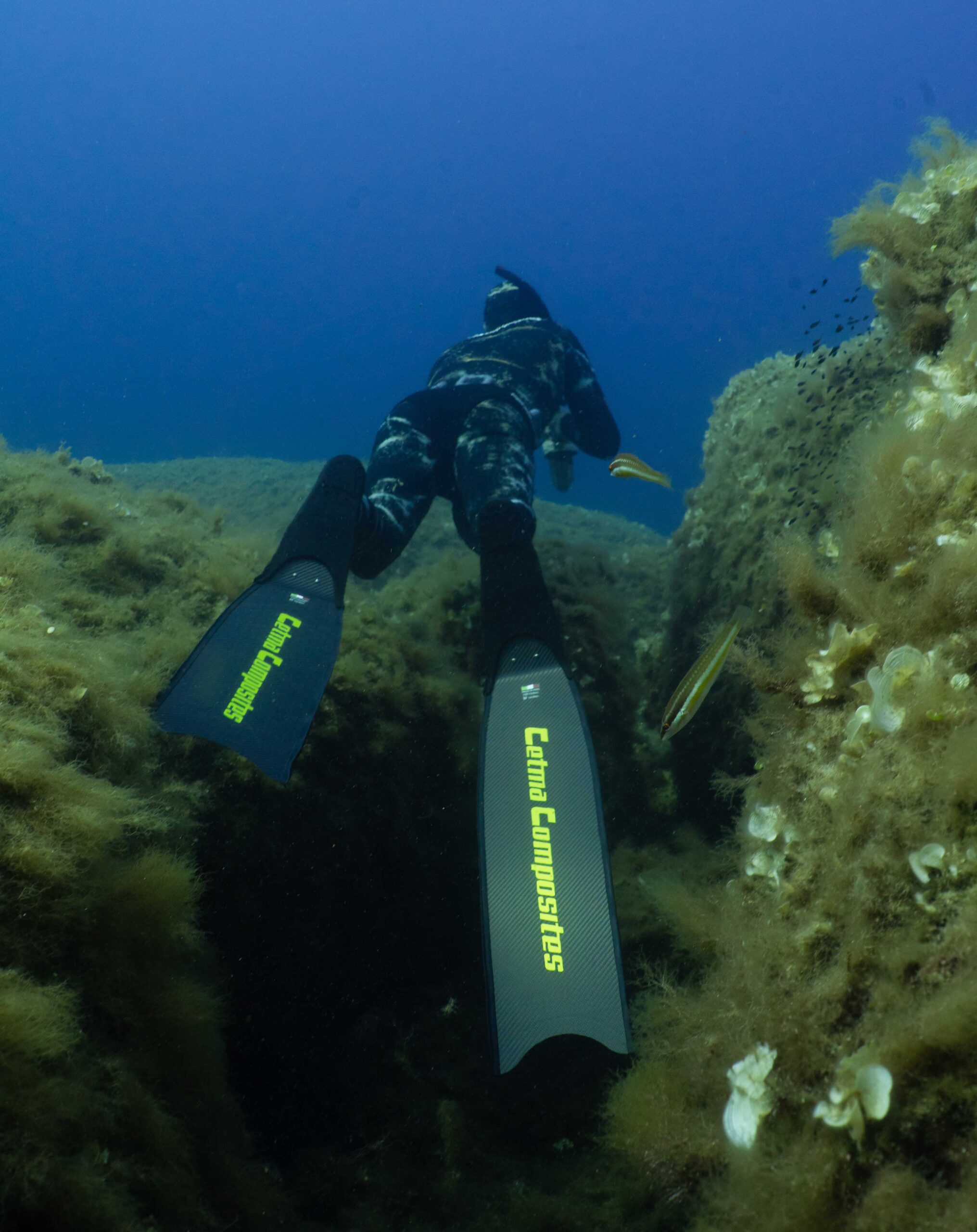


Cetma Composites: the New Pulse

Salvimar: Antares Dive Light
21 September 2026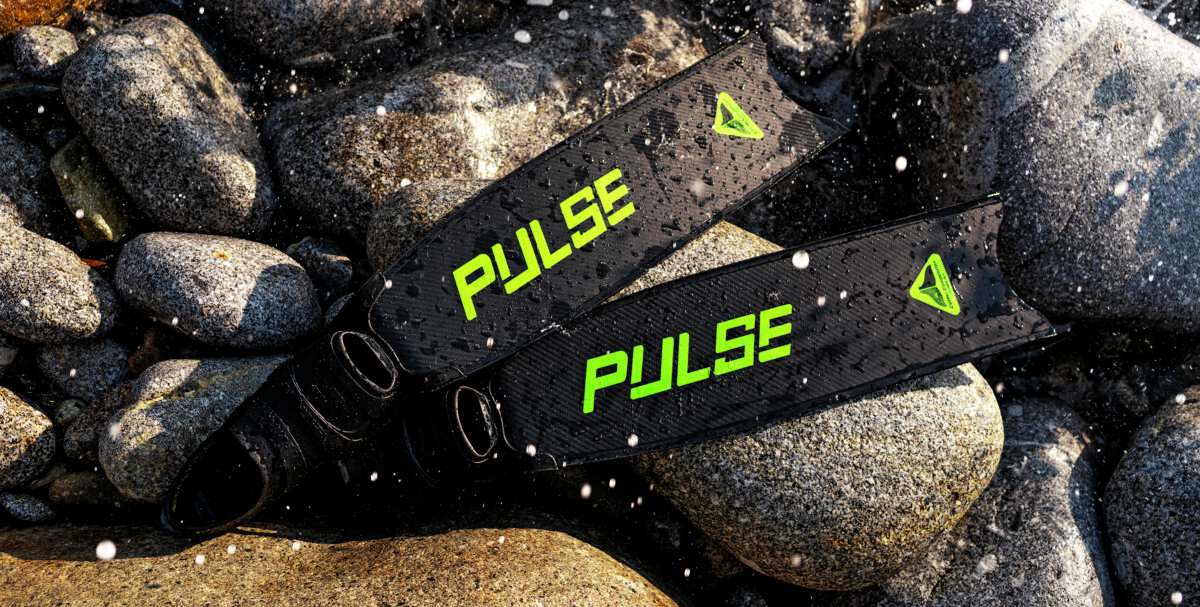
With this model, the company has put into practice a genuine “hyperbolic revolution” that changes the way we fin. What impressed us most is its versatility: its ability to adapt both to the slow, measured action typical of deep dives and to the shorter, more reactive fin stroke used in shallow water, perhaps in foam and current
In recent years, the world of carbon fins has followed a very specific direction. Blades have become increasingly longer, with the focus on achieving maximum efficiency at greater depths and producing ever more specialized models—fins capable of excelling in a particular situation, but often less versatile when the pace of the day changes. Yet anyone who goes spearfishing knows very well that the sea rarely follows our plans.
A dive trip rarely begins with a descent to the limits of one’s capabilities. In most cases, we enter the water and start in shallow or medium-depth areas to find our rhythm, read the sea, observe the baitfish, understand the current, and gradually allow the body to regain the right connection with the environment. Dive after dive, relaxation increases, apnea improves, and it becomes natural to move toward increasingly demanding depths.
Within a short time, the seabed, the technique and the way we fin all change. Consequently, the qualities we expect from our equipment change as well. And it is precisely through this constant evolution that a fin reveals its true character.
Personally, I almost always use long carbon blades, primarily designed for a specific type of use, but over time I have learned to adapt them to practically every technique. I believe this is what many spearfishers do: we choose a blade we know well and then take it everywhere, from shallow water to more demanding depths, modifying our fin stroke to compensate for its strengths and limitations. This adaptation eventually becomes natural, but it is still the spearfisher who has to adapt to the fin.
Before trying Cetma Composites’ Pulse, at least in my experience, I had never found a blade genuinely designed around a different approach: not a specialized model to be adapted to everything, but a fin conceived from the outset to accompany a day of spearfishing that constantly changes. This is the philosophy behind the Pulse.
The first thing that catches your attention is the 66-centimeter blade measured from the bend—a dimension that goes against the trend of recent years, when the pursuit of performance has almost always meant increasing blade length. Reducing the length, however, does not necessarily mean giving up performance. It means pursuing it in a different way.
The heart of the project is the new hyperbolic curvature, designed to make the blade work differently from a traditional fin. This is combined with a new carbon laminate and a proprietary manufacturing process which, at least on paper, promise a quicker response, more uniform deformation and improved energy return. Interesting, without a doubt, but as always, it is the sea that ultimately determines whether all of this really makes sense…
When the Sea Changes Pace
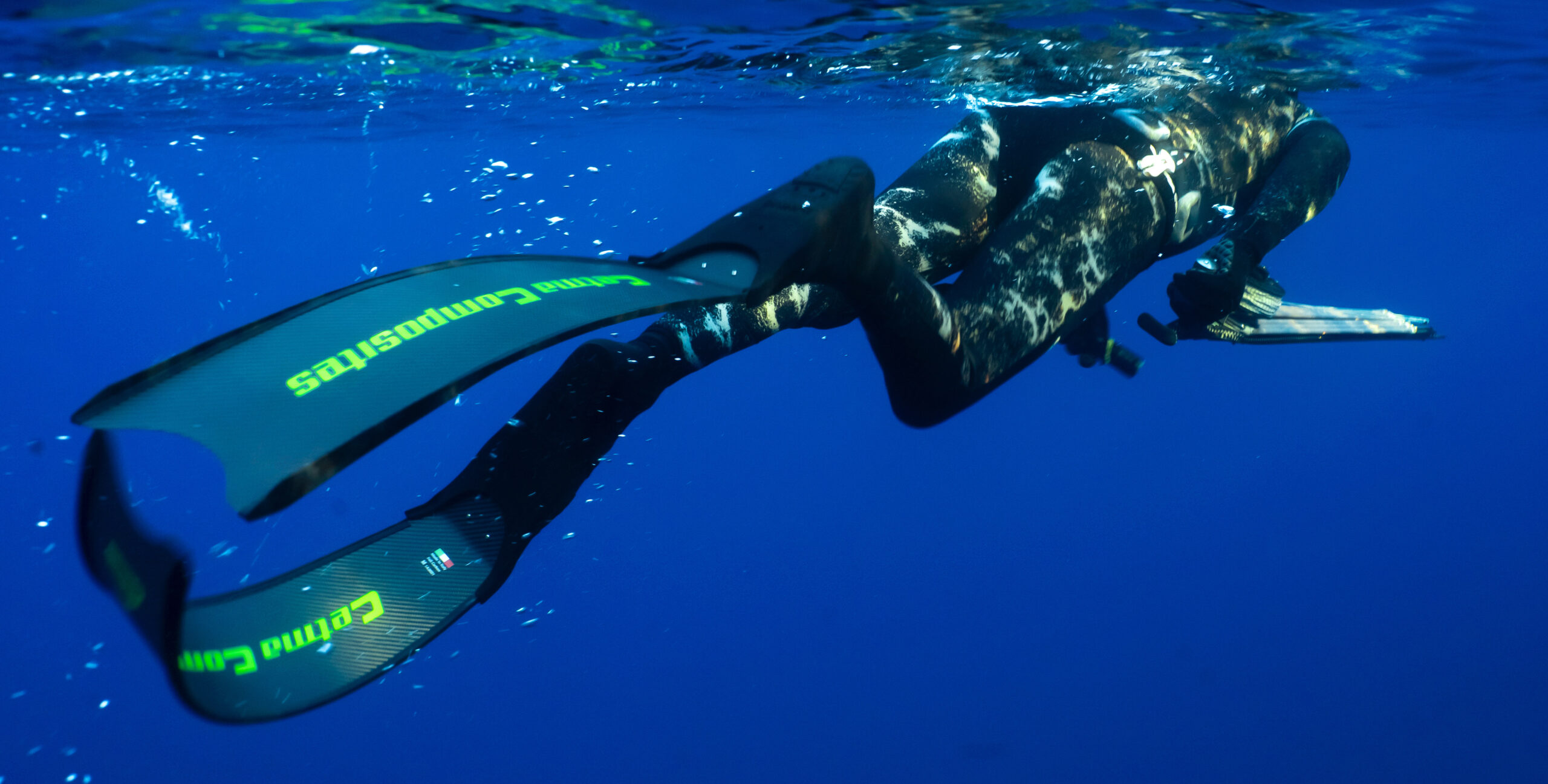
I used the Pulse on seven or eight outings without changing the way I normally fish and without deliberately seeking situations designed specifically to test them. The idea was simple: to use them as I would any fin intended to become a permanent part of my equipment. The first impressions come even before diving to depth.
During short surface movements, the blade feels agile and pleasant. It does not require a wide kick to start working and makes it easy to alternate between slow, almost silent movements and short bursts of acceleration when it is necessary to reach an interesting area quickly. This may seem like a minor detail, but an important part of the action takes place precisely at the surface. This is where we observe the baitfish, study the seabed and decide how to approach the next dive.
In shallow water, only a few kicks are enough to reach the bottom quickly. Once settled among the rocks, one of the aspects I appreciated most immediately becomes apparent. The short blade follows the body naturally, allows quick movements and makes the small, continuous adjustments typical of stalking genuinely easy. Stopping, starting again, correcting the trajectory or moving slowly between the rocks all become natural gestures, without constantly having to think about where to “park” your fins.
As the hours passed, the dive gradually moved toward greater depths, and that was when I began to understand the character of the Pulse more clearly. Normally, a highly reactive model tends to have a sharper and more demanding response, while a more progressive blade follows the movement more smoothly but often sacrifices something when it comes to acceleration. The Pulse attempts to bring these two worlds together.
The response is immediate. The blade engages quickly and returns energy from the very first kicks, while continuing to accompany the movement with a genuinely natural progression. This characteristic becomes particularly noticeable when, during the same outing, you constantly switch from short, quick movements in shallow water to more relaxed descents, glides, deep stalking and ascents.
During the dive, after the initial kicks needed to build speed, only small ankle movements are required to use the blades almost like a rudder. Trajectory corrections are precise and natural, allowing you to arrive exactly where you want without interrupting the smoothness of the glide. The response remains equally consistent during the ascent. The first kicks immediately deliver effective thrust, while afterwards it is possible to lengthen the movement and maintain a regular rhythm without feeling any stiffness.
More than the absolute power, what impressed me was the way every movement is converted into forward progress. It is a sensation that is difficult to describe in words, but very easy to recognize after a few hours of use.
Beyond the Ledge
Among the fish caught during the test outings, there is one that, more than any other, helped me understand the character of the Pulse. I was near a ledge at around 22 meters, with a drop-off disappearing into the blue beyond 30 meters. The water was exceptionally clear and, during the dive, I spotted in the distance the silhouette of a grouper hovering motionless just below the edge.
I was too far away to attempt an approach, so I decided to abort the dive and ascend slowly, keeping an eye on it for as long as possible.
Once at the surface, I moved a few meters to position myself directly above the ledge and began my recovery. I tried to lower my heart rate, relax and mentally reconstruct the next dive, visualizing the descent trajectory and the exact point where I would have to look over the edge.
When I felt ready, I began the second descent. The first kicks were decisive, just enough to build speed during the first few meters. Once I had gained the necessary momentum, I gradually slowed down, allowing myself to be carried toward the bottom in an almost effortless, leaf-like descent.
At this stage, the Pulse completely changed roles: they were no longer there to propel me forward, but almost became a rudder. With small ankle movements, I was able to continuously correct my trajectory, arriving exactly at the point I had visualized during the recovery.
In the meantime, the grouper had disappeared. I continued along the planned line and, a few meters before the ledge, covered the final stretch with a short stalking approach, using the edge as cover. Here, completely different movements were required: short, silent and controlled kicks, just enough to move forward without disturbing the fish.
The blade followed the body naturally and never felt cumbersome among the rocks.
When I slowly looked over the edge, the grouper was there. I instinctively took the shot and it connected, but the fish reacted immediately. It fought hard to reach the base of the drop-off.
At that moment I was not thinking about the fins, but only about preventing the fish from gaining those final few meters. I immediately detached myself from the bottom and began finning decisively.
Everything happened extremely naturally: every movement was instantly converted into forward progress, allowing me to counter the fish's escape without having to change my fin stroke or stiffen the movement. Once I had pulled the fish away from the bottom, I opened the reel and completed the ascent calmly, finally enjoying the catch.
Looking back at that dive, I realized that during the same sequence I had asked the Pulse to perform completely different tasks: an immediate response during the first meters of the descent, precision during the glide, small and silent movements during the stalking approach, and powerful thrust during the most delicate moment of the fight.
That was when I understood their true identity. Not so much a fin capable of doing everything, but a fin capable of accompanying the spearfisher when the same sequence requires characteristics that would normally appear to be opposites.
Its True Identity
After seven or eight outings, I became convinced that the Pulse was not created to pursue extreme performance, but to answer a need that many enthusiasts know well: to face a day that constantly changes without feeling limited by their equipment.
Today, the market offers numerous highly specialized models, designed to deliver maximum performance in a particular context. It is an approach I understand and continue to appreciate. I also often use long carbon blades, primarily designed for deep diving, and then adapt them to other techniques when the day requires it.
The Pulse, however, follows a different approach, seeking to accompany the spearfisher throughout the entire outing rather than excel at just one moment.
Naturally, this also means accepting a few compromises. If I were to spend a summer day entirely dedicated to blue-water hunting, knowing in advance that I would spend many hours at the same significant depths, I would probably choose a more specialized fin designed specifically for that type of use. However, at least in the way I experience the sea, those outings represent only one part of the season.
If, on the other hand, I set out from shore without knowing how the day will develop—if I am going for a training session, a competition, or an outing in which I will constantly alternate between shallow water, medium depths, waiting, stalking and a few more demanding dives—then the Pulse would be among the first fins I would consider.
It is precisely in these situations that their character emerges. The response remains immediate without becoming nervous, while the movement is accompanied by a consistently natural progression, successfully combining two qualities that normally tend to oppose one another: good responsiveness during acceleration and a smoothness that makes it possible to spend many hours in the water without feeling as though you have overly demanding blades on your feet.
Final Thoughts
After several weeks of use, the feeling that remains with me is that of a balanced fin, enjoyable to use and, above all, capable of adapting to the constant changes that characterize a normal day at sea.
From silent finning at the surface to stalking among the rocks, from deeper waiting dives to the ascent, it always maintains consistent behavior without forcing the spearfisher to change the way they work.
As I mentioned earlier, it is not the fin I would choose for a day entirely dedicated to blue-water hunting, but I would certainly put it in my gear bag when I know that the outing could evolve in different ways and require different techniques.
It is precisely this versatility, rather than the pursuit of extreme performance, that has convinced me the most.
In a market increasingly oriented toward highly specialized products, Cetma has chosen to follow a different path. At least in my experience, that choice has found tangible confirmation in the sea.
Technical Specifications
Blade material: HM-HR Hot Melt Pre-preg Carbon
Length from bend: 660 mm
Width: 185 mm
Blade/foot-pocket angle: 33°
Geometry: Hyperbolic curvature
Manufacturing technology: OOT (Out of Autoclave Technology)
Foot pocket: Cetma Swing
Production: 100% Made in Italy